AI Search Optimization Tools 2026: 8 Best Platforms Compared

Fabio Bergmann
AI search optimization tools are platforms that track, analyze, and improve how often a brand is mentioned, cited, or recommended by AI systems like ChatGPT, Gemini, Perplexity, and Google AI Overviews, benchmarking sentiment, position, and citation sources across models.
Disclosure: this article is published by Sightkick, which builds one of the tools compared below. Sightkick's entry is marked and its limitations stated alongside competitors'.

Key takeaways
- AI search optimization tools track brand mentions, sentiment, and citations across ChatGPT, Gemini, Perplexity, Claude, and Google AI Overviews. This is a distinct discipline from keyword-only SEO software.
- Entry-plan limits vary sharply. OtterlyAI's Lite plan ($29/mo, 15 prompts) is 3.4x cheaper than Profound's $99/mo starting price, while Rankscale's Pro plan works out roughly 12x cheaper per credit.
- Few tools cover both citation tracking and automated content/backlink production. Most platforms only monitor, leaving the fixing step manual.
- Sightkick tracks 7 surfaces (including Reddit) and pairs monitoring with automated article publishing and backlink outreach. It's newer to market than the monitoring-only players.
- The best workflow layers a monitoring tool, a content engine, and a backlink/citation engine. One dashboard rarely does everything.
What Are AI Search Optimization Tools?
AI search optimization tools track, analyze, and improve how often a brand is mentioned, cited, or recommended by AI systems like ChatGPT, Gemini, Perplexity, and Google AI Overviews. Unlike keyword SEO software, they monitor conversational answers instead of ranked links, benchmarking sentiment, position, and citation sources across models daily.
The core job is continuous prompt testing across AI models to see which brands get recommended. Outputs are generated answers, not URL lists, so these tools differ structurally from rank trackers. Rankscale monitors ChatGPT, Gemini, Perplexity, Claude, DeepSeek, Mistral, Grok, and Copilot and more. Many pair monitoring with content or outreach tools to act on the gaps found.
How Do AI Search Optimization Tools Differ From Standard SEO Software?
AI search optimization tools measure presence inside generated answers — mentions, sentiment, citation type, recommendation position — while standard SEO software measures rankings, backlinks, and keyword positions on SERPs. The two overlap on technical foundations. AI tools add prompt-based monitoring across multiple LLMs that classic platforms don't run.
- Traditional SEO tools track URL rank. AI tools track whether a brand is named in an answer at all.
- AI tools classify citation sources (UGC, editorial, owned, competitor), a layer classic rank trackers don't offer.
- Some AI tools add crawler and bot monitoring. Peec AI's Agent Analytics tracks bots from ChatGPT, Gemini, Perplexity, and Claude visiting a site, and Profound can monitor AI crawler activity and measure AI traffic.
Do Ahrefs or Semrush Support AI Search Optimization?
Ahrefs and Semrush were built around backlink and keyword-rank data, not native multi-model prompt monitoring. The provided sources don't document their AI features, so treat legacy suites as rank-and-backlink infrastructure. Dedicated AI search optimization tools run daily prompts across ChatGPT, Gemini, Perplexity, and Claude simultaneously.
Dedicated tools track citation type and sentiment. The practical approach: keep your existing keyword and backlink tools, then add a dedicated AI visibility layer on top. For a deeper breakdown, see our guide to the best AI search visibility tools for 2026.
Comparison Table: Pricing and Tracked Engines at a Glance
Entry-tier pricing and prompt limits vary widely across AI search optimization tools, from $29/month with 15 prompts to $99/month covering thousands of tracked answers. This table compares starting price, prompt or credit volume, and tracked AI engines for six platforms, filling a gap most reviews leave high level.
| Tool | Entry price | Prompts / credits | Tracked engines |
|---|---|---|---|
| OtterlyAI (Lite) | $29/mo | 15 prompts | 4 engines |
| Profound | $99/mo | AEO content score | All major LLMs |
| Peec AI (Starter) | 15% annual discount | 50 prompts, 3 models | Daily tracking |
| AirOps (Solo) | Free start | 100 prompts/pages | ChatGPT only |
| Rankscale (Pro) | $99/mo | 1,200 credits (~4,800 answers) | 9+ engines |
| Sightkick | 7-day free trial | Prompts across 4 models daily | 7 surfaces incl. Reddit |
Sightkick: Combines Tracking, Content, and Backlinks in One Autopilot
Sightkick tracks brand mentions across ChatGPT, Gemini, Google AI Overviews, Google AI Mode, Claude, Perplexity, and Reddit, then automates the fix by publishing SEO articles and running backlink outreach without manual input. Disclosure: Sightkick is our product. As a newer entrant, it lacks the multi-year benchmark history monitoring-only competitors have built.
- The Insights engine runs prompts across 4 AI models daily to benchmark competitors and record which brands get recommended.
- The Articles engine researches, writes, scores, adds images, links, and schema, and publishes to a CMS on schedule.
- The Backlinks engine finds AI-cited pages, verifies owner contacts, sends outreach and follow-ups, and confirms links went live.
- Sightkick MCP provides 29 tools that integrate into Claude, ChatGPT, Cursor, OpenClaw, and Codex.
- A 7-day free trial, 2-minute setup, and a free brand visibility report are available at entry.
Citation sources are classified by type — UGC, Editorial, Yours (owned), and Competitor — so brands see where AI recommendations originate rather than a flat mention count.
OtterlyAI: Best for Low-Cost Entry Monitoring
OtterlyAI is an AI search visibility tool starting at $29/month, tracking 7 major AI search engines including ChatGPT, Gemini, and Perplexity. Its Lite plan offers 15 prompts across 4 tracked engines, one of the cheapest ways to start monitoring, though prompt volume trails mid-tier competitors.
- The Lite plan covers ChatGPT, Google AI Overviews, Perplexity, and Microsoft Copilot.
- The Standard plan adds API access, MCP access, and Agent Analytics at 100 prompts.
- A free trial with no credit card required lowers the barrier to test.
- Full 7-engine coverage requires stepping beyond the Lite tier.
Profound: Best for AEO Content Scoring at Scale
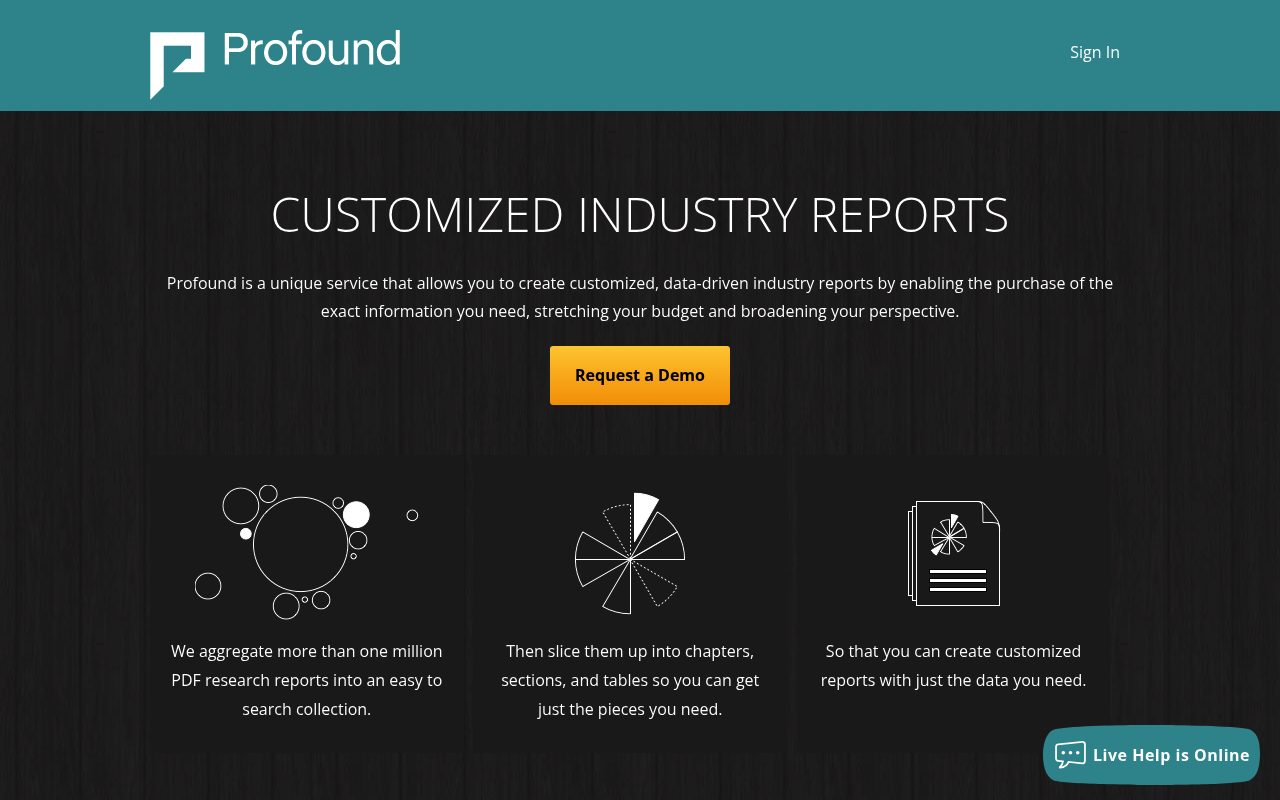
Screenshot: Profound website, September 2026.
Profound is an AI search visibility platform starting at $99/month, built around a machine-learning AEO content score. That score is trained on millions of top-cited pages to predict the likelihood that content becomes a top-cited page in AI search. The higher entry price makes it a bigger commitment than lighter monitoring tools.
Profound's Index draws on 1.5+ billion real user conversations across 50+ industries, spans all major LLMs, and updates weekly. At $99/month, Profound's starting price is 3.4x OtterlyAI's Lite plan.
Peec AI: Best for Agency Teams Needing Bot-Level Tracking
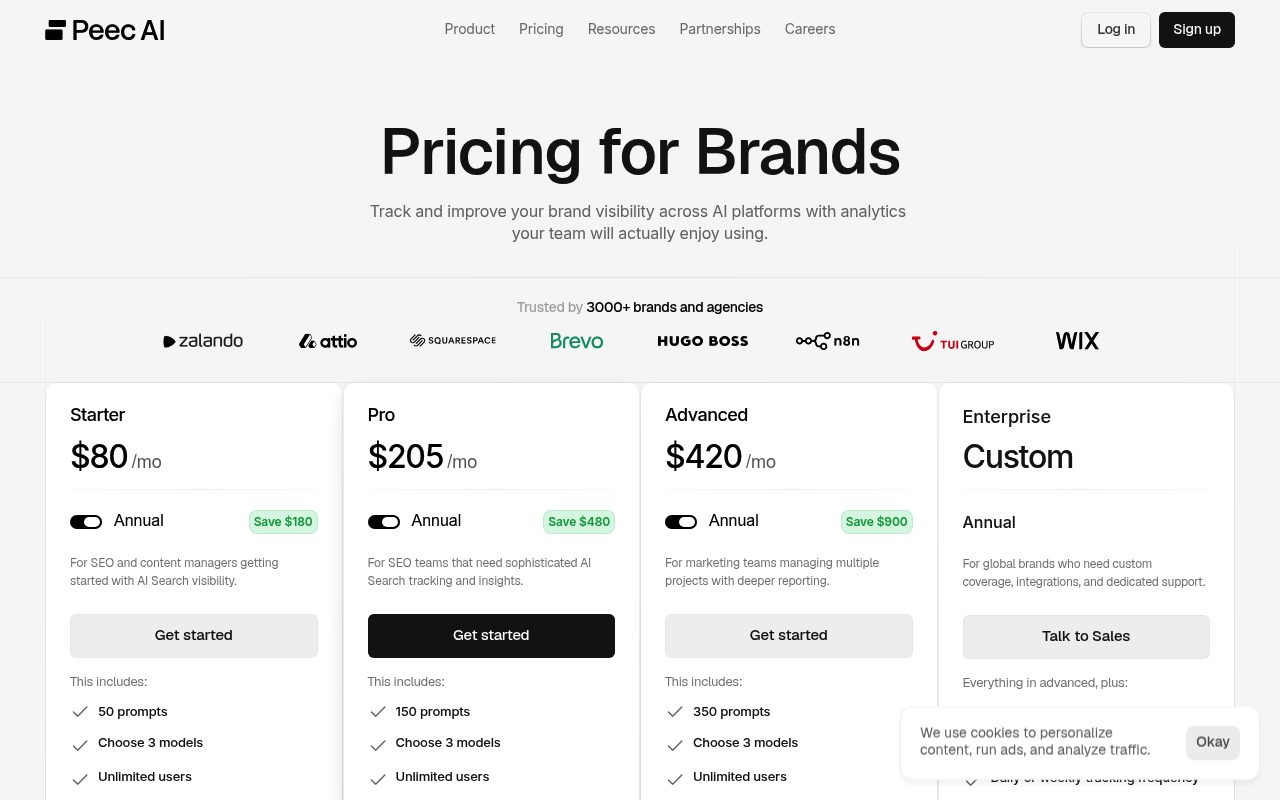
Screenshot: Peec AI pricing page, September 2026.
Peec AI is an AI search visibility tool trusted by 3,000+ brands and agencies, with a Starter plan offering 50 prompts across 3 models and daily tracking. Agent Analytics tracks bots from ChatGPT, Gemini, Perplexity, and Claude visiting a site, useful for agencies proving crawl-level impact to clients.
- The Starter plan includes 50 prompts, 3 models, unlimited users, and 1 project.
- Pricing scales by tracked prompts and models, not region or language.
- Annual billing gets a 15% discount.
- 50 prompts is 3.3x OtterlyAI's Lite plan prompt volume.
AirOps: Best for ChatGPT-First Content Teams
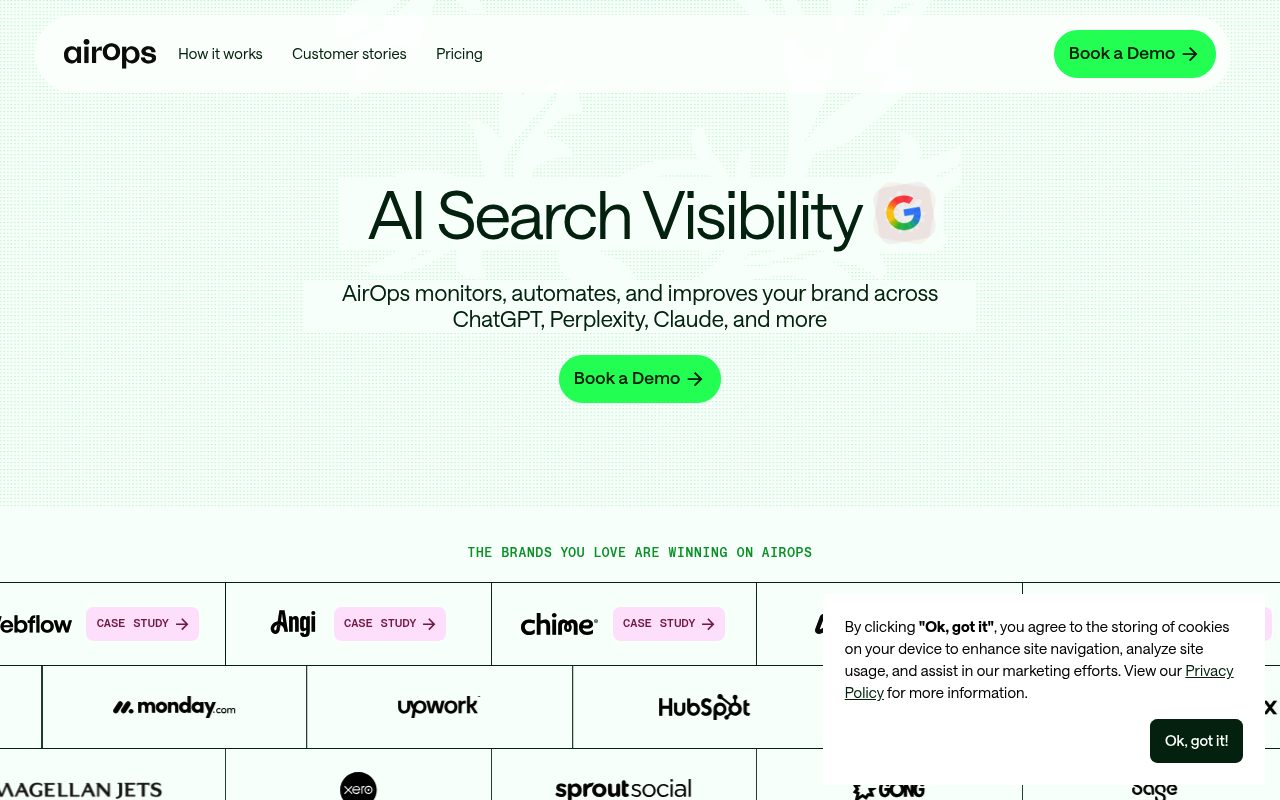
Screenshot: AirOps ai search visibility page, September 2026.
AirOps is an AI search visibility platform whose Solo plan tracks 100 prompts and pages with ChatGPT-only insights, expanding to multi-engine coverage on the Pro plan. Its data foundation includes 47M observed actions and 6B citations, appealing to teams wanting deep ChatGPT signal before scaling to other engines.
- The Solo plan includes monthly opportunity reports and a free-start option.
- The Pro plan adds 250 tracked prompts/pages, multi-engine insights, weekly reports, and unlimited seats.
- The platform-wide dataset spans 10M AI search journeys and 70M high-value prompts.
- Limitation: the entry plan's single-engine focus may underserve brands needing Gemini or Perplexity data early.
Rankscale: Best Value for High-Volume Answer Tracking
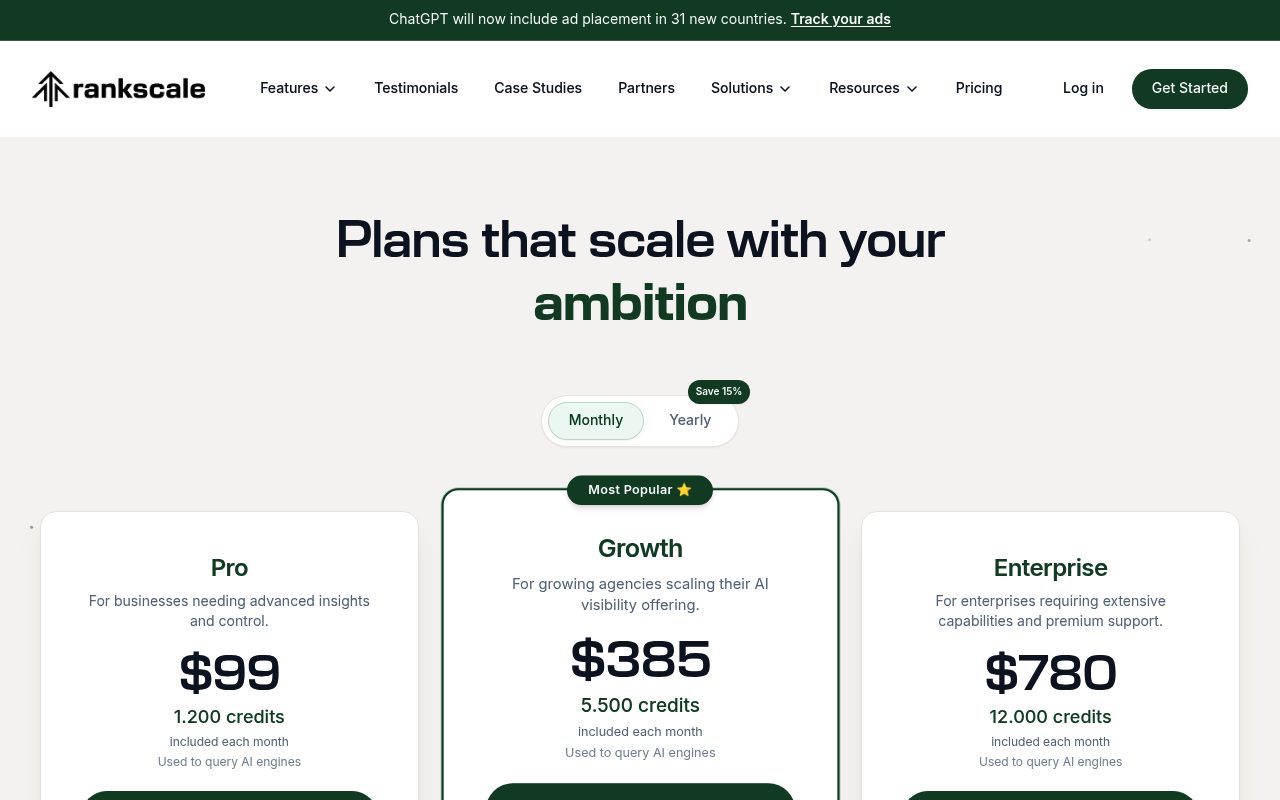
Screenshot: Rankscale pricing page, September 2026.
Rankscale is an AI search optimization tool whose Pro plan costs $99/month for 1,200 credits, tracking up to 4,800 answers across 9+ engines including ChatGPT, Gemini, Perplexity, DeepSeek, and Grok. At roughly 0.25 credits per query, it delivers the highest answer volume per dollar among the tools compared here.
- The Pro plan includes 50 page audits per month alongside answer tracking.
- It monitors a wider engine list than the others here, including DeepSeek, Mistral, and Grok.
- Rankscale says unused credits roll over on some plans, reducing waste in uneven months.
- It works out roughly 12.1x cheaper per credit than OtterlyAI's Lite plan when normalized per prompt.
What Does the Data Say About Entry-Tier Value?
Normalizing entry plans by prompt or credit volume reveals value gaps ranking pages skip. OtterlyAI's $29 Lite plan is 3.4x cheaper than Profound's $99 starting price, yet Rankscale's $99 Pro plan with 1,200 credits is about 12.1x cheaper per credit than OtterlyAI's Lite plan divided by prompt count.
- Sticker price alone misrepresents value. Divide by tracked prompts or credits.
- High-volume plans like Rankscale suit brands running many competitor and keyword prompts.
- Low-prompt, low-price plans like OtterlyAI Lite suit brands testing a narrow set of queries.
- Peec AI's 50-prompt Starter plan offers 3.3x the volume of OtterlyAI's Lite tier.
But sticker price and volume only measure the monitoring half. The real cost sits downstream: a tool that flags a gap still leaves you to write the article and chase the backlink by hand. That's why the choice isn't only price per prompt. It's whether the tool acts on what it finds. Profound frames the stakes for the content side directly:
The AEO content score is a machine-learning metric trained on millions of top-cited pages to predict the likelihood that content becomes a top-cited page in AI search. — Profound
Scoring predicts. It doesn't publish. Treat these ratios as a starting benchmark, not a final verdict. Feature depth, engine coverage, and whether a tool closes the loop all shift the calculus.
What's the Workflow for Using These Tools With an Existing Content Strategy?
A practical workflow layers three functions: monitor brand visibility daily across AI models, identify content gaps where competitors are cited but you aren't, then close those gaps with new articles and backlink outreach to already-cited pages. Treat AI visibility tools as an input to content calendars, not a replacement for existing SEO operations.
- Run daily prompts to find winnable keywords and competitor mentions.
- Feed gaps into a content engine that scores, writes, and publishes on schedule.
- Target pages AI already cites for backlink outreach, then verify links go live.
- Re-check sentiment and position weekly to confirm the loop is working.
Most tools stop at step one. Sightkick automates the full sequence, but the same steps work with separate tools stitched together. For a fuller setup, see our guide to monitoring your brand in AI search results and the best AI SEO automation platforms for 2026.
Frequently asked questions
How do I optimize for AI search?
Optimize for AI search by monitoring which prompts trigger brand mentions across ChatGPT, Gemini, Perplexity, and Google AI Overviews, then publishing content that directly answers those prompts with clear structure and schema. Pair this with backlink outreach to pages AI already cites, since citation sources heavily influence which brands get recommended.
Which AI tool is best for searching brand visibility?
There's no single best tool. It depends on needs. OtterlyAI suits low-cost entry monitoring, Rankscale suits high-volume answer tracking, Peec AI suits agencies needing bot-level data, and Sightkick suits teams wanting tracking plus automated content and backlink fixes in one platform.
Is SEO dead now with AI?
No. SEO isn't dead, but it's expanding. AI search optimization adds prompt monitoring, citation tracking, and sentiment analysis on top of traditional ranking factors. Brands still need strong technical SEO and content, plus visibility across AI-generated answers, not just search result pages.
What is AI search optimization called?
It's commonly called AI search optimization, AEO (answer engine optimization), or GEO (generative engine optimization). All three describe improving how often and how favorably a brand appears in AI-generated answers across ChatGPT, Gemini, Perplexity, and similar platforms.
Which AI search optimization tools offer the best analytics dashboards?
Profound and Rankscale offer deep dashboards. Profound centers on its AEO content score and weekly-updated Index; Rankscale on credit-based answer tracking across 9+ engines. Peec AI adds Agent Analytics for bot-level visibility. Sightkick combines mention and sentiment tracking with citation-type breakdowns (UGC, editorial, owned, competitor) in one view.
Do platforms track visibility across Perplexity, ChatGPT, and Gemini specifically?
Yes, the named tools here cover these three. OtterlyAI tracks 7 engines including all three, Rankscale covers 9+ engines, and Sightkick tracks 7 surfaces including Perplexity, ChatGPT, Gemini, and Reddit, broader than tools limited to one or two engines.
Want to see where you stand before picking a tool? Start a free Sightkick brand visibility report. Two-minute setup, and it shows your visibility, sentiment, mentions, and position across AI search relative to competitors.